Steel plays a major role across modern construction. Structural frames, reinforcement bars, bridges, industrial facilities, foundations, and fabricated components all depend on steel with suitable mechanical properties. A material may look sound during visual inspection, yet its actual strength and ductility can only be confirmed through appropriate testing.
Destructive steel testing Quezon City provides construction professionals with measurable information about how a steel specimen performs when exposed to controlled loading. Such testing can help engineers, contractors, developers, quality-control teams, and project managers verify material properties before steel becomes part of a critical structural application.
Inch-On Materials Testing Laboratory is an independent engineering and construction laboratory established in November 2018. The laboratory is DPWH-BRS accredited and provides testing services for soil and construction materials while following ASTM and AASHTO testing standards. Its broader technical service offering includes advanced testing supported by specialized laboratory equipment.
What Is Destructive Steel Testing?
Destructive steel testing is a laboratory procedure where a prepared steel specimen undergoes controlled physical loading until permanent deformation, failure, or another defined testing endpoint occurs. The purpose is to measure specific mechanical characteristics of the material.
Unlike a visual inspection, destructive testing produces measurable data. Depending on the selected test method, results may provide information about tensile strength, yield strength, elongation, ductility, and other mechanical properties.
For construction projects, Destructive steel testing Quezon City can support material verification when project specifications require documented mechanical test results. The appropriate test method depends on the steel product, grade, dimensions, intended application, and applicable standard.
How Does Destructive Steel Testing Work?
A typical testing process may include:
- Steel sample selection
- Sample identification
- Specimen preparation
- Measurement of specimen dimensions
- Placement of the specimen into the testing machine
- Controlled application of force
- Recording of load and deformation
- Observation of specimen behavior
- Evaluation of test data
- Preparation of a technical report
Proper sample identification is important because test results must remain connected to the correct material, batch, project, or supplier documentation.
Why Is Destructive Steel Testing Important for Construction?
Steel is often selected because structural applications require predictable mechanical performance. A project team may receive material certificates or supplier documentation, but laboratory testing can provide additional technical evidence based on an actual specimen.
Destructive steel testing Quezon City can support construction quality-control programs by giving project teams objective data for review.
Material Strength Verification
Strength values provide engineers with important information about how steel responds to applied loads. Tensile testing, for example, can establish values associated with yield behavior and ultimate tensile capacity.
Construction Quality Control
Testing can become part of a project’s material acceptance and quality-control procedures. Results can be reviewed alongside project specifications, supplier certificates, drawings, purchase records, and other documentation.
Specification Checks
Different construction projects may specify particular steel grades, dimensions, mechanical properties, and testing procedures. Laboratory testing can help determine whether submitted samples satisfy the stated testing requirements.
Early Identification of Material Concerns
Testing before extensive installation may help identify material concerns at an earlier project stage. This can give engineers and contractors useful information before questionable material becomes difficult or costly to replace.
Common Destructive Steel Testing Methods
The exact testing program should always follow the requirements for the steel product and project. Several destructive mechanical tests are commonly associated with steel evaluation.
Tensile Strength Testing
Tensile testing places a steel specimen under controlled pulling force. The machine records how the specimen responds as the applied load increases.
Depending on the applicable procedure, tensile testing may provide information such as:
- Yield strength
- Ultimate tensile strength
- Elongation
- Stress-strain behavior
- Failure characteristics
Tensile testing is particularly useful when a project needs measurable information about how steel responds to increasing tensile loads.
For Destructive steel testing Quezon City, tensile testing may form part of a material verification program where project requirements call for mechanical property data.
Bend Testing
Bend testing evaluates how a steel specimen behaves when subjected to controlled bending around a specified configuration.
For reinforcement steel and other applications where bending performance matters, this test can provide information about ductility and visible surface behavior after bending.
The applicable procedure, bend diameter, specimen dimensions, and acceptance requirements depend on the relevant specification or testing standard.
Failure Observation
A destructive test may also provide useful information through observation of the specimen after failure or permanent deformation.
Laboratory personnel may document the failure location, visible fracture characteristics, deformation, and other relevant observations required by the applicable procedure.
Steel Specimen Preparation Before Testing
Good testing begins before the specimen reaches the testing machine. Sample preparation and identification must receive careful attention because poor preparation can affect the usefulness of the final data.
Sample Identification
Steel samples should be properly identified before testing. Available information may include:
- Steel type
- Grade
- Diameter or section size
- Heat number or batch reference
- Supplier
- Delivery information
- Project name
- Sample identification number
Clear identification helps maintain traceability between the physical specimen and project documentation.
Accurate Measurements
Specimen dimensions may be required before a mechanical test begins. Depending on the method, measurements can affect calculations related to stress, strain, cross-sectional area, or other reported properties.
Proper Handling
Steel specimens should be handled carefully before testing. Unnecessary damage, deformation, contamination, or improper storage may affect specimen condition.
The laboratory should provide appropriate sample preparation requirements based on the selected test method.
How Destructive Steel Testing Supports Quality Control
Construction quality control involves more than checking finished structures. Material verification can provide valuable information before and during construction.
Destructive steel testing Quezon City can become part of a documented material-control process.
Before Steel Installation
Testing may be requested before steel materials are incorporated into structural work. This can provide project personnel with test information before installation progresses.
During Construction
Periodic testing may form part of a larger quality-control program. Project teams can compare laboratory results with material specifications and other project records.
When Material Questions Arise
Questions may arise when delivered steel appears different from expected material, documentation is incomplete, or project personnel require additional verification.
A laboratory test can provide measurable technical information that engineers and other qualified project personnel can review.
Supporting Engineering Decisions
Laboratory results are one source of technical information. Engineers may consider test findings alongside design requirements, specifications, inspection observations, supplier documentation, and other relevant project information.
Why Choose an Engineering Materials Testing Laboratory?
Selecting a suitable laboratory matters when test results will support construction decisions or project documentation.
A laboratory should have appropriate equipment, trained personnel, standardized procedures, proper sample handling, and clear reporting practices.
For Destructive steel testing Quezon City, project teams may want to ask about:
- Applicable testing standards
- Laboratory accreditation
- Equipment condition and calibration
- Specimen requirements
- Sample identification procedures
- Testing capabilities
- Report contents
- Expected turnaround time
- Project-specific requirements
These questions can help clients understand whether a laboratory can accommodate their testing needs.
About Inch-On Materials Testing Laboratory
Inch-On Materials Testing Laboratory is a DPWH-BRS accredited Engineering and Construction Laboratory established in November 2018. The company operates as an independent testing laboratory focused on soil and construction material quality verification.
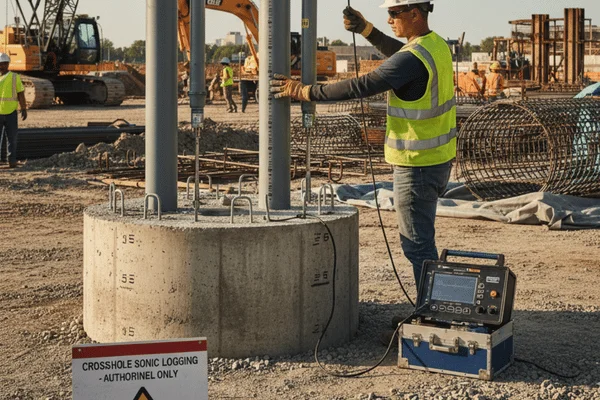
Its stated capabilities include laboratory testing plus field testing of soil, concrete, and foundation piles using specialized equipment. Inch-On follows ASTM and AASHTO testing standards as part of its laboratory and field testing activities.
This broad testing capability allows project teams to approach material evaluation through laboratory-based and site-based testing services according to project requirements.
Advanced Testing Capabilities at Inch-On
Advanced testing forms part of Inch-On’s broader technical service offering. The supplied company service material presents ADVANCED TESTING as a dedicated service category and shows laboratory personnel working with materials-testing equipment and specimens.
A controlled laboratory environment can help technicians perform testing according to established procedures while recording relevant measurements and observations.
For clients seeking Destructive steel testing Quezon City, laboratory capabilities, equipment, testing procedures, and documentation practices are important factors to discuss before submitting samples.
Destructive Steel Testing for Different Construction Applications
Steel appears across many types of construction work. Testing requirements can vary according to the material and its intended use.
Building Construction
Structural buildings may contain reinforcement steel, structural sections, plates, bars, and fabricated steel components. Testing may help verify selected mechanical properties where project specifications require laboratory evidence.
Infrastructure Projects
Bridges, public structures, transport facilities, drainage structures, and other infrastructure projects may have detailed material specifications. Steel testing can support quality-control documentation for applicable components.
Industrial Facilities
Industrial buildings and facilities can require steel for structural framing, supports, platforms, equipment structures, and other applications. Material verification may form part of project quality procedures.
Steel Fabrication
Fabricators may need material information before steel is processed or incorporated into finished components. Testing can provide data that supports project documentation and material-control procedures.
What Information Should You Prepare Before Requesting Steel Testing?
Clients can make the laboratory coordination process easier by preparing relevant material information.
Before requesting Destructive steel testing Quezon City, consider preparing:
- Steel type
- Steel grade
- Bar, plate, pipe, or section size
- Number of available samples
- Project specifications
- Material certificates
- Supplier details
- Batch or heat information
- Required testing standard
- Project reference
- Preferred testing schedule
- Required report information
If the appropriate testing method is uncertain, provide the laboratory with available material documentation so its technical team can help identify the relevant testing requirements.
What Can a Steel Testing Report Include?
A laboratory report may contain several categories of technical information. Exact report content depends on the selected test and laboratory procedure.
Potential report details include:
- Client information
- Project information
- Sample identification
- Material description
- Test method
- Applicable standard
- Specimen dimensions
- Testing date
- Recorded load information
- Mechanical property results
- Deformation or elongation data
- Failure observations
- Laboratory identification
- Authorized signatures or approvals
A clear report allows engineers, contractors, inspectors, and project managers to review the test findings alongside other project records.
Destructive Testing vs. Non-Destructive Testing
Destructive and non-destructive testing serve different purposes.
| Factor | Destructive Testing | Non-Destructive Testing |
|---|---|---|
| Specimen condition | May permanently deform or fail | Designed to preserve the tested component |
| Main purpose | Measures mechanical behavior or material properties | Detects conditions or defects without major physical damage |
| Sample requirement | Usually requires a prepared specimen | May be performed directly on an existing component |
| Typical application | Material qualification and mechanical testing | Inspection and condition assessment |
| Output | Quantitative mechanical test data | Inspection or condition-related information |
Neither approach automatically replaces the other. The correct method depends on the project objective, material, specification, and applicable testing requirements.
Questions to Ask Before Selecting a Steel Testing Laboratory
A construction team can ask several questions before arranging Destructive steel testing Quezon City.
Is the Laboratory Properly Accredited?
Ask about relevant accreditation and whether the laboratory’s scope covers the required testing activity.
Which Standards Are Followed?
Ask whether the selected test follows an applicable ASTM, AASHTO, or project-specific procedure.
Is the Testing Equipment Suitable?
The laboratory should have equipment appropriate for the requested test and specimen type.
How Should Samples Be Prepared?
Ask about specimen dimensions, quantity, identification, and submission requirements before preparing samples.
What Will the Final Report Contain?
Understanding the expected report format can help project teams prepare their documentation requirements.
Can the Laboratory Support Project-Specific Requirements?
Some projects have testing requirements that differ according to material type, specification, government contract, or engineering design. Confirm the required procedure before testing begins.
Why Local Steel Testing Access Matters
Construction teams working around Quezon City and nearby areas may benefit from convenient laboratory coordination. Sample delivery, documentation, scheduling, technical communication, and report processing can become easier when project personnel can coordinate directly with an appropriate testing laboratory.
The phrase Destructive steel testing Quezon City reflects a local search need for construction teams looking for steel material testing services connected with projects around the area.
Rather than selecting a laboratory solely because of location, project teams should also review accreditation, applicable testing standards, equipment, laboratory capabilities, reporting practices, and project requirements.
When Should You Request Destructive Steel Testing?
Timing depends on the project specifications and quality-control plan. Potential situations include:
- Before major steel installation
- During material acceptance
- Before fabrication
- During scheduled quality-control testing
- When supplier documentation requires additional verification
- When material characteristics are questioned
- When project specifications require mechanical testing
- When engineering documentation calls for laboratory results
Early coordination can help ensure that suitable specimens are available and that testing follows the correct procedure.
Takeaway
Steel material quality deserves careful attention because structural applications depend on predictable material performance. Destructive steel testing Quezon City can provide measurable laboratory data that supports material verification, construction quality control, specification review, and engineering documentation.
A suitable testing program should begin with clear sample identification and an understanding of the applicable material specification. The selected laboratory should have suitable equipment, recognized procedures, qualified personnel, and appropriate accreditation for the required work.
Inch-On Materials Testing Laboratory provides independent engineering and construction laboratory services, with DPWH-BRS accreditation and testing procedures based on ASTM and AASHTO standards. Its broader testing services include laboratory and field evaluation of construction materials and specialized in-situ testing capabilities.
For projects requiring Destructive steel testing Quezon City, clients can coordinate with Inch-On Materials Testing Laboratory to discuss the steel type, specimen requirements, applicable testing procedure, documentation, and project schedule before testing begins.
Frequently Asked Questions About Destructive Steel Testing Quezon City
What Is Destructive Steel Testing?
Destructive steel testing is a controlled laboratory process where a steel specimen undergoes loading until permanent deformation, fracture, or another defined endpoint occurs. The process can provide measurable information about selected mechanical properties.
What Does a Tensile Steel Test Measure?
A tensile test may measure properties such as yield strength, ultimate tensile strength, elongation, and stress-strain behavior, depending on the applicable test procedure.
Is Destructive Testing Suitable for Reinforcing Bars?
Yes, reinforcing bars can be subjected to applicable destructive mechanical tests when the project requires such evaluation. The specific procedure depends on the bar type, grade, dimensions, project specification, and applicable standard.
Does Destructive Steel Testing Damage the Sample?
Yes. Permanent deformation or specimen failure is normally part of destructive mechanical testing. A prepared sample is therefore used rather than relying on an entire installed structural member.
How Should Steel Samples Be Prepared?
Preparation depends on the selected test method and steel product. Sample dimensions, identification, quantity, and handling requirements should be confirmed with the testing laboratory before submission.
What Standards Can Apply to Steel Testing?
Applicable standards depend on the material and selected test. ASTM standards are commonly referenced for material testing, while AASHTO standards may apply to certain construction and infrastructure testing requirements. Project specifications should also be reviewed.
Why Is DPWH-BRS Accreditation Relevant?
DPWH-BRS accreditation indicates that the laboratory has undergone an accreditation process associated with the Department of Public Works and Highways – Bureau of Research and Standards. Project teams should still confirm that the required test falls within the laboratory’s applicable scope.
Can Inch-On Test Other Construction Materials?
Yes. According to the supplied company information, Inch-On provides laboratory and field testing services covering soil and construction materials, along with in-situ testing for soil, concrete, and foundation piles.