Work performed above ground level presents serious risks across construction sites, factories, warehouses, towers, rooftops, and building maintenance areas. A single slip can cause severe injury when suitable fall arrest equipment is absent or incorrectly selected. Choosing a dependable Self Retracting Lanyard in Myanmar helps workers move more freely while maintaining a secure connection to an approved anchorage point.
GROXX GEARS supplies heavy-duty industrial solutions for demanding work environments. Its fall protection range supports construction crews, maintenance teams, contractors, facility managers, and safety officers who require dependable equipment for elevated tasks. A Self Retracting Lanyard in Myanmar can become a key part of a complete personal fall arrest setup when paired with a full body harness, suitable connector, certified anchor, proper training, and rescue planning.
Unlike a fixed-length lanyard, a self-retracting model automatically extends and retracts as a worker changes position. This action reduces loose line around the user and supports controlled movement across a work zone. Sudden acceleration activates the locking mechanism, helping stop a fall before excessive distance develops.
What Is a Self Retracting Lanyard?
A self-retracting lanyard is a fall arrest device fitted with cable or webbing stored inside a protective housing. The line extends when a worker moves away from the unit and retracts when the worker moves closer. Normal movement remains smooth, while a sudden pull causes the internal brake to lock.
The main purpose of a Self Retracting Lanyard in Myanmar is to connect a worker’s full body harness to a suitable anchor while allowing practical movement. The equipment reduces slack compared with many fixed-length lanyards, which may help limit free-fall distance when correctly positioned.
Common components include a protective casing, internal spring, braking mechanism, cable or webbing line, anchorage connector, user connector, fall indicator, and product label. Each part must remain free from damage, corrosion, chemical exposure, burns, cuts, or deformation.
A self-retracting lanyard does not remove every fall hazard. Safe performance depends on anchor placement, worker weight, clearance, equipment compatibility, site conditions, and correct use. Safety teams should always follow product instructions and approved work-at-height procedures.
How a Self Retracting Lanyard Works
The line inside the unit connects to a spring-loaded reel. As the worker moves, the reel releases only the amount of cable or webbing required. When the worker moves back toward the anchor, the spring draws the line back into the casing.
A sudden fall creates rapid line movement. The braking mechanism reacts to this speed and locks the reel. This quick response helps reduce the distance travelled before fall arrest begins.
A Self Retracting Lanyard in Myanmar may be mounted overhead, connected to a suitable horizontal system, or used through another approved setup based on the product model. Some units support foot-level anchorage or sharp-edge exposure, while others do not. Product documentation must confirm the correct application.
Users should never assume every retractable unit performs the same way. Working length, line material, weight capacity, clearance requirement, anchor position, edge rating, and connector design can vary greatly between models.
Why Choose a Self Retracting Lanyard in Myanmar?
Construction and maintenance projects across Myanmar often require workers to access roofs, towers, ladders, elevated platforms, facade areas, steel structures, and industrial equipment. Such tasks may involve changing positions throughout the work period. A fixed connection can sometimes restrict movement or create unwanted slack.
A Self Retracting Lanyard in Myanmar supports greater freedom by adjusting line length automatically. The worker does not need to manually shorten or gather the line during normal movement. This design can help reduce trip hazards and keep excess line away from tools, machinery, and structural parts.
Retractable equipment also supports tasks where limited fall clearance is a concern. Since the locking system reacts quickly, suitable models may arrest a fall within a shorter distance than certain traditional lanyard arrangements.
The right product can support roof work, equipment servicing, facade maintenance, tower access, warehouse operations, structural assembly, electrical projects, and mechanical installations. Proper assessment remains necessary before any equipment reaches the work area.
Major Benefits of Self-Retracting Fall Protection
A major advantage of a Self Retracting Lanyard in Myanmar is automatic line control. Workers can move naturally while remaining connected to their anchor. The cable or webbing adjusts continuously according to the user’s position.
Reduced slack is another valuable feature. Excess line can catch around equipment, snag against structural components, or create a tripping concern. Automatic retraction keeps the line closer to the user and work path.
Rapid locking may also reduce free-fall distance. A shorter fall can lower the forces placed on the worker and system, though actual performance depends on the model, setup, anchor location, and total clearance.
Durable housing protects internal parts against common jobsite conditions. Cable models may suit tasks where abrasion resistance matters, while webbing models often provide a lighter option for workers who carry equipment throughout the day.
A retractable lanyard can also support a wider safety program. Equipment selection, inspection records, training, rescue preparation, supervision, and hazard assessment should all work together.
Common Applications Across Myanmar
A Self Retracting Lanyard in Myanmar can support many sectors where workers face a fall risk. Construction crews may use retractable equipment during roof installation, steel erection, structural work, and elevated finishing tasks.
Building maintenance personnel may require fall arrest equipment while accessing facade systems, rooftop machinery, drainage points, glass panels, lighting fixtures, or external building components. Suspended access and maintenance systems may also require compatible personal protective equipment.
Manufacturing facilities often contain elevated platforms, overhead equipment, storage racks, and service areas. Maintenance crews working above machinery may benefit from shorter fall arrest distances and automatic line management.
Warehouse teams may require protection during rack servicing, roof repairs, equipment inspection, or work from elevated platforms. Energy, telecommunications, and utility crews may also use retractable equipment for towers, poles, support structures, and elevated installations.
Each application requires its own safety assessment. A model suitable for indoor platform work may not be suitable for outdoor edge exposure, corrosive areas, hot work, or foot-level anchorage.
Self Retracting Lanyard Versus Standard Shock-Absorbing Lanyard
A standard shock-absorbing lanyard usually has a fixed length. The user remains connected through a set amount of webbing or rope, with an energy absorber designed to reduce arrest forces during a fall.
A Self Retracting Lanyard in Myanmar adjusts its working length automatically. This feature often gives workers more movement while reducing slack. The internal brake also reacts quickly when a fall begins.
Traditional lanyards may suit straightforward tasks where sufficient clearance exists and worker movement remains limited. Retractable units may suit areas where workers change positions often or where reduced arrest distance offers an advantage.
Neither option should be selected based only on convenience. Anchor height, fall clearance, swing-fall risk, user capacity, work direction, edge exposure, and rescue access should guide the final choice.
Safety personnel should also consider equipment weight, inspection needs, service requirements, storage, and connector compatibility before purchase.
Cable Versus Webbing Self Retracting Lanyards
Cable models commonly use galvanized steel or stainless steel line, depending on product specifications. They often suit demanding industrial applications where abrasion, rough surfaces, or longer working lengths may be present.
Cable inspection should check for broken strands, corrosion, bird-caging, flattening, sharp bends, kinks, or crushing. Any questionable condition requires immediate removal from service.
Webbing models use high-strength synthetic material. They are often lighter and may feel more comfortable for mobile workers. Compact webbing units can support short-range movement around platforms, roofs, lifts, and maintenance areas.
Webbing inspection should check for cuts, tears, burns, frayed edges, damaged stitching, chemical exposure, discoloration, and hard or melted sections.
Choosing a cable or webbing Self Retracting Lanyard in Myanmar depends on the worksite, environmental exposure, required length, equipment weight, edge conditions, and manufacturer guidance.
Key Features to Check Before Buying
Working length should match the size of the work zone. A line that is too short may restrict access, while unnecessary extra length can add weight and cost.
The line material should match expected exposure. Cable may suit abrasive conditions, while webbing may suit workers seeking a lighter unit. Housing strength also matters because the casing protects the brake and reel.
Connector type requires careful review. Hooks, carabiners, swivels, and anchorage connectors must be compatible with the full body harness and anchor system. Connectors should close and lock correctly without side loading.
Buyers should also review user capacity, arrest distance, clearance requirements, product weight, fall indicator, inspection instructions, certification records, and service guidance.
A Self Retracting Lanyard in Myanmar intended for sharp-edge work must carry the correct edge rating. Standard units should not pass over sharp or abrasive surfaces unless product instructions allow that setup.
Choosing the Correct Anchor Location
Anchor placement strongly affects fall distance and swing-fall risk. Overhead anchorage is often preferred because it can reduce free fall and keep the worker closer to the point directly below the anchor.
Foot-level anchorage may create a longer fall before the unit locks. Only a model approved for that position should be selected. Total clearance must account for line extension, arrest distance, harness movement, worker height, connector length, and safety margin.
Lateral movement also requires attention. A worker positioned far to one side of the anchor may swing after a fall. This motion can cause contact with beams, walls, machinery, or lower structures.
A Self Retracting Lanyard in Myanmar should connect only to an anchor designed for fall arrest. Pipes, guardrails, scaffolding parts, electrical conduits, and temporary fixtures must not serve as anchor points unless formally approved for that purpose.
GROXX GEARS can support broader fall protection requirements through anchor equipment, horizontal lifelines, vertical lifelines, harnesses, and related safety gear.
Understanding Fall Clearance and Swing Fall
Fall clearance refers to the open distance required below a worker so the body does not strike a lower surface after a fall. This calculation changes according to equipment type, anchor position, line length, arrest performance, user height, and work area.
Product documents should provide the correct clearance guidance for each model. Generic measurements should never replace the manufacturer’s stated requirements.
Swing fall occurs when the anchor sits too far from the worker’s vertical position. After a fall, the user may move sideways like a pendulum. Even when the system stops the downward motion, sideways impact can still cause injury.
Before using a Self Retracting Lanyard in Myanmar, safety personnel should identify possible obstructions, roof edges, machinery, walls, platforms, and structural members. The work area should also allow practical rescue access.
Full Body Harness Compatibility
A self-retracting lanyard forms one part of a personal fall arrest system. A properly fitted full body harness spreads arrest forces across stronger areas of the body and supports the worker after a fall.
The harness attachment point must match the equipment instructions. Many systems connect to a dorsal D-ring located on the worker’s back. Some compact personal units may follow different connection requirements.
Harness straps should sit flat without twists. Chest, shoulder, thigh, and sub-pelvic straps should receive proper adjustment. Loose straps may affect body position during arrest, while straps that are too tight can limit movement and comfort.
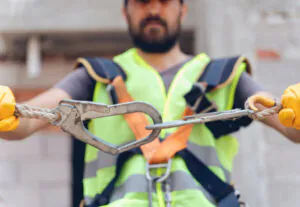
Connector compatibility also matters. A hook should not press against the gate of another connector or create unintended loading. A Self Retracting Lanyard in Myanmar should always be paired with approved and compatible equipment.
Inspection Checklist Before Every Use
Every user should inspect the unit before work starts. The casing should be checked for cracks, dents, loose parts, missing fasteners, or signs of impact.
The full cable or webbing line should be extended slowly and checked from end to end. The line should retract smoothly without hesitation, excessive noise, or loose sections.
A sharp pull should activate the locking mechanism. Hooks and carabiners should close and lock correctly. Gates should move freely without sticking.
Labels must remain readable. The fall indicator should show no sign of activation. Inspection records should confirm that formal checks remain current.
A damaged Self Retracting Lanyard in Myanmar should be removed from service immediately. Workers should never continue using questionable equipment simply because no replacement is close by.
Care, Storage, and Maintenance
Proper storage helps protect fall arrest equipment. Units should remain dry, clean, and away from direct sunlight, high heat, sharp tools, chemicals, moisture, and corrosive substances.
Cable or webbing should never be crushed under heavy equipment. The unit should not be thrown from elevated areas or dragged across rough ground.
Cleaning should follow manufacturer guidance. Strong solvents, bleach, fuel, oil, or unapproved chemicals may damage materials or internal parts.
Only authorized personnel should open or repair the housing. Internal spring and brake parts require specialist attention. Unauthorized repair may affect operation and invalidate product approval.
Any Self Retracting Lanyard in Myanmar that arrests a fall should be removed from service and assessed according to approved procedures before possible reuse.
Common Mistakes to Avoid
Using a retractable lanyard without checking fall clearance is a serious mistake. The locking action may be fast, yet insufficient open space can still lead to impact.
Another common error involves connecting to an unsuitable anchor. Convenience should never replace structural approval.
Workers should also avoid attaching the hook to an unsupported harness point, another lanyard, a weak guardrail, or an incompatible connector. Sharp-edge use requires a suitable product rating.
Allowing the line to run across abrasive surfaces can weaken cable or webbing. Users should also avoid sudden test drops, intentional shock loading, or tying knots along the line.
Skipping daily inspection can allow hidden damage to remain unnoticed. A Self Retracting Lanyard in Myanmar should receive proper checks before each use and formal inspection according to site rules.
Why Choose GROXX GEARS?
GROXX GEARS provides heavy-duty equipment for construction, maintenance, rigging, industrial work, and fall protection. The company focuses on products designed for difficult operating conditions where dependable performance matters.
Customers seeking a Self Retracting Lanyard in Myanmar can also review related fall protection equipment, such as full body harnesses, anchor points, horizontal lifelines, vertical lifelines, suspended access solutions, and building maintenance systems.
This broad product range supports companies that prefer a more coordinated approach to work-at-height protection. Harnesses, connectors, anchors, and retractable equipment should function as one compatible setup rather than separate items chosen without proper review.
GROXX GEARS can support contractors, facility managers, project teams, safety officers, and industrial operators seeking suitable equipment for varied jobsite conditions.
Building a Complete Fall Protection System
A complete system begins with hazard assessment. Safety personnel should identify fall edges, access routes, anchor locations, lower-level obstacles, rescue points, and worker movement.
The equipment setup may include a full body harness, Self Retracting Lanyard in Myanmar, approved anchor, lifeline, connector, helmet, rescue kit, and other task-specific protective gear.
Worker training remains essential. Each user should know how to inspect equipment, connect correctly, calculate clearance, avoid swing fall, recognize damage, and respond after a fall.
Rescue planning should exist before work begins. Suspension after fall arrest can create serious health risks. A trained rescue team, suitable equipment, clear communication, and rapid response procedure should remain available.
Frequently Asked Questions
What does a self-retracting lanyard do?
A self-retracting lanyard follows worker movement by releasing and recovering cable or webbing. Sudden line acceleration activates the brake, helping arrest a fall.
Is a self-retracting lanyard better than a standard lanyard?
Neither option suits every task. A retractable model often provides better line control and shorter arrest distance, while a standard lanyard may suit simple work areas with sufficient clearance.
Can a self-retracting lanyard connect at foot level?
Only products approved for foot-level anchorage should be used that way. Standard models may not safely manage the longer fall distance or edge exposure created by low anchorage.
Can a retractable lanyard pass over a sharp edge?
Only a leading-edge-rated model should be considered for such work. Product instructions must confirm the allowed edge conditions and setup.
How often should the equipment be inspected?
Users should complete a check before every use. A competent person should also perform formal inspections according to manufacturer guidance, site policy, usage frequency, and environmental exposure.
What should happen after a fall?
The unit should be removed from service immediately. Qualified personnel should assess the equipment according to approved procedures before any possible return to use.
Where can companies source a Self Retracting Lanyard in Myanmar?
GROXX GEARS provides industrial and fall protection solutions for construction, maintenance, access, and facility management requirements. Product choice should reflect the planned task, working height, anchor location, user capacity, and site conditions.