Working at height requires dependable equipment, careful planning, and strict safety procedures. Construction crews, maintenance teams, factory technicians, and high-rise workers face serious fall hazards whenever tasks take place above ground level. A reliable Self Retracting Lanyard in Indonesia can help reduce those risks by supporting controlled movement while keeping the lifeline close to the worker.
A self retracting lanyard extends as the worker moves and automatically pulls back excess webbing or cable. Sudden downward acceleration activates its internal braking system, helping stop a fall before the worker travels a greater distance. This fast response makes the device a valuable part of many personal fall arrest setups.
GROXX GEARS supplies heavy-duty industrial solutions designed for demanding environments across Indonesia. Its product range supports construction, building maintenance, manufacturing, rigging, and work-at-height operations. Businesses seeking a Self Retracting Lanyard in Indonesia can benefit from equipment chosen according to the worker, job location, anchor position, fall clearance, and surrounding hazards.
Proper product selection remains essential. No single lanyard suits every roof, platform, ladder, tower, or structural work area. Safety managers must assess each task before choosing equipment. Worker training, daily checks, formal inspections, approved anchorages, and rescue planning must also support every fall protection setup.
What Is a Self Retracting Lanyard?
A self retracting lanyard is a fall arrest device containing webbing or wire rope stored inside a protective housing. The line extends smoothly when the worker moves away from the anchor and retracts when the worker moves closer. This automatic action reduces loose material around the body and work area.
The device contains an internal braking mechanism. Normal walking or climbing allows the line to move freely. A sudden pull caused by rapid downward motion triggers the brake, which locks the line. That quick locking action can reduce free-fall distance when the unit is properly selected, installed, and connected.
A Self Retracting Lanyard in Indonesia usually connects between a full-body harness and an approved anchorage. Some compact models attach near the harness D-ring, while larger units may attach directly to an overhead anchor. Twin-leg models can support continuous connection when workers transfer from one anchor point to another.
Standard shock-absorbing lanyards have a fixed length and may create more slack during movement. Self retracting models manage line length automatically. This feature can provide greater mobility and cleaner line management, especially across platforms, roofs, structural frames, and maintenance areas.
How a Self Retracting Lanyard Supports Fall Protection
Work-at-height safety depends on controlling both the chance of a fall and its possible effects. Guardrails, safe platforms, access controls, and proper work procedures should reduce exposure first. Personal fall arrest equipment provides added protection when fall hazards cannot be fully removed.
A Self Retracting Lanyard in Indonesia helps workers move while maintaining connection to an anchorage. The retracting line follows body movement, reducing excess slack that might otherwise drag, twist, snag, or create a trip hazard. Workers can change position without repeatedly adjusting line length by hand.
Rapid locking is one of the product’s key functions. When a sudden drop occurs, the internal mechanism responds quickly. Correct setup may shorten the distance travelled before arrest compared with some fixed-length systems. Less travel can help reduce contact with lower platforms, machinery, structural members, or ground level.
Performance still depends on proper anchor placement. An overhead anchor often creates a better fall path than an anchor placed near foot level. Low anchors may increase free-fall distance and place greater force on the equipment and worker. Swing-fall risks must also be assessed whenever the anchor sits far to one side.
Why Choose a Self Retracting Lanyard in Indonesia?
Construction and industrial projects across Indonesia involve varied work conditions. Employees may face rain, humidity, heat, dust, abrasive surfaces, chemical exposure, sharp edges, and heavy equipment traffic. Fall protection products must match those conditions and remain suitable for their assigned task.
A Self Retracting Lanyard in Indonesia can support roof work, steel erection, tower access, facade maintenance, warehouse repairs, equipment servicing, and elevated inspections. Webbing models may suit tasks where lighter weight and flexibility matter. Cable models may suit harsher areas where abrasion resistance carries greater value.
Buying based only on product price can lead to poor equipment choices. Safety teams should review working length, material type, rated capacity, connector design, anchor location, edge exposure, and rescue requirements. Product labels and manufacturer instructions must also remain clear and accessible.
GROXX GEARS focuses on industrial equipment built for demanding work sites. Its commitment to high-strength materials, durable engineering, and precise manufacturing supports companies that need dependable equipment for critical tasks. Choosing the correct Self Retracting Lanyard in Indonesia can help workers perform assigned duties with greater confidence and better line control.
Main Components of a Self Retracting Lanyard
The protective housing surrounds the line, spring mechanism, and braking system. Housing materials vary across models. Compact products may feature lightweight casing, while heavy-duty units may use stronger materials suited to industrial exposure.
Webbing offers flexibility and lower equipment weight. It can work well for many construction, maintenance, and indoor applications. However, cuts, burns, sharp surfaces, welding sparks, and abrasive edges can damage webbing. Daily inspection remains essential.
Wire rope or cable often provides greater resistance to abrasion. Cable models may suit steel structures, industrial plants, towers, and rugged work areas. Users must check for broken wires, corrosion, kinks, crushing, or other visible damage before each use.
The braking mechanism controls line movement during a fall. Smooth extension and retraction should occur during normal use. A firm pull should trigger immediate locking. Any hesitation, unusual sound, sticking, or poor retraction should lead to removal from service.
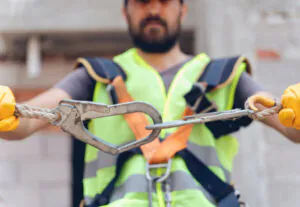
Connectors attach the device to the harness and anchor. Snap hooks, carabiners, swivels, and anchorage connectors must remain compatible. Gates should close fully and lock correctly. Swivels may help reduce twisting as workers change direction.
Some units include internal or external energy-absorbing components. These features help manage arrest forces. A Self Retracting Lanyard in Indonesia must always be used according to its stated specifications, weight limits, approved configuration, and manufacturer directions.
Common Types of Self Retracting Lanyards
Webbing self retracting lanyards offer a lightweight option for workers who move frequently. Their flexible line can support roof tasks, maintenance activity, and general construction duties. Careful protection from sharp edges and hot work remains necessary.
Cable self retracting lanyards suit tougher industrial settings. Steel cable can resist abrasion better than standard webbing, though corrosion and broken wire strands must be checked. Storage conditions should protect the cable and internal mechanism from moisture and contaminants.
Personal self retracting lanyards are compact units commonly worn near the harness attachment point. They can provide mobility without the bulk of larger overhead devices. Twin-leg personal models allow workers to transfer between anchor points while maintaining connection.
Leading-edge models are created for tasks where the line may contact an exposed edge during a fall. Ordinary models should not be assumed safe for this application. Edge material, edge sharpness, anchor position, and fall direction must all guide product choice.
Rescue or retrieval models may include features for raising or lowering a worker. These units often support confined-space operations or planned emergency recovery. Such equipment must form part of a documented rescue procedure led by trained personnel.
Industries That Need a Self Retracting Lanyard in Indonesia
Construction teams may use self retracting devices during structural assembly, roofing, steel erection, scaffolding access, concrete work, and elevated installation. Changing work positions make automatic line management especially useful across active job sites.
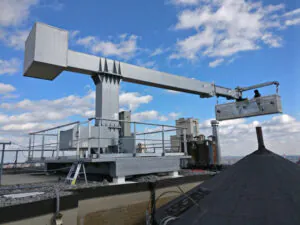
Building maintenance crews often work on roofs, facades, suspended platforms, and exterior access systems. Glass replacement, inspection, cleaning, repair, and equipment servicing may require reliable personal fall arrest equipment.
GROXX GEARS also provides building maintenance systems and suspended access solutions for complex structures. A Self Retracting Lanyard in Indonesia may support those systems when required by the approved safety plan and task configuration.
Manufacturing plants contain elevated platforms, overhead service areas, machinery, and maintenance access points. Technicians may need fall protection during repairs, inspections, shutdowns, and equipment installation.
Warehouses and logistics facilities may present hazards around mezzanines, loading areas, rack systems, maintenance platforms, and elevated conveyor equipment. Proper anchorage and clearance assessments remain necessary before workers begin a task.
Energy, utility, and telecommunications teams may work on towers, poles, technical structures, and power facilities. Equipment must suit climbing activity, environmental exposure, anchor availability, and rescue needs.
Key Benefits of a Self Retracting Lanyard in Indonesia
Automatic retraction keeps the line close to the worker. Reduced slack may lower the chance of snagging, dragging, or stepping over loose material. Cleaner line management can support smoother movement across elevated work areas.
Fast locking can reduce fall distance when conditions and setup are correct. A shorter arrest path may provide valuable protection where limited clearance exists. Safety managers must still complete detailed fall-clearance calculations before approving the system.
Worker mobility is another major benefit. The line extends and retracts based on movement, allowing users to approach tools, materials, and assigned work zones without constant manual adjustment.
Compact models can reduce equipment bulk. Twin-leg units can also support continuous connection during anchor transfers. These features can help teams choose a Self Retracting Lanyard in Indonesia for tasks requiring regular movement.
Durability varies by model, material, and intended application. Webbing products may suit lighter duties, while cable products may suit harsher settings. Proper care and storage help protect each unit from premature damage.
Self Retracting Lanyard Versus a Standard Shock-Absorbing Lanyard
A standard shock-absorbing lanyard usually has a fixed length. It may offer a straightforward option for tasks where the worker remains near an anchor and sufficient fall clearance is available. Its energy absorber deploys during a fall to help reduce arrest forces.
A self retracting unit adjusts line length automatically. This action may reduce slack and support broader movement. The internal brake locks after sudden acceleration, which can shorten free-fall distance under approved conditions.
Fall clearance differs between products. Fixed-length lanyards may require more space below the worker because of free fall, energy absorber deployment, worker height, connector length, and safety margin. Self retracting devices may require less clearance, but each model has its own calculations.
Anchor position also affects both systems. A Self Retracting Lanyard in Indonesia should ideally connect according to the manufacturer’s approved setup. Foot-level anchorage, leading-edge exposure, and horizontal use may require specially rated equipment.
Neither option is automatically better for every job. The right choice depends on worker movement, anchor position, available clearance, work surface, edge exposure, rated capacity, and rescue plan.
How to Select the Right Self Retracting Lanyard in Indonesia
Start by reviewing the required working length. The line should allow access to the assigned work zone without adding unnecessary reach. Excessive length may increase swing-fall exposure or allow workers to enter unsafe areas.
Next, confirm the rated capacity. Worker body weight, clothing, tools, and carried equipment must remain within the product’s stated range. Safety teams should never guess or exceed manufacturer limits.
Anchor location requires careful review. Overhead anchors generally help reduce free fall. Anchors near foot level may increase fall distance and forces. The device must be approved for the chosen anchor position.
Fall clearance must account for the locking distance, deceleration distance, worker height, harness movement, connector length, anchor position, and added safety margin. Nearby equipment, platforms, beams, vehicles, or ground level must also be considered.
Job-site hazards affect material choice. Webbing may suffer damage near sharp edges, welding work, heat, or abrasive surfaces. Cable may suit rougher conditions but still requires checks for corrosion, kinks, and broken strands.
Connector compatibility is equally important. Harness D-rings, hooks, carabiners, swivels, and anchors must connect safely without gate loading or accidental release. GROXX GEARS can help businesses assess product requirements before selecting a Self Retracting Lanyard in Indonesia.
Proper Use of a Self Retracting Lanyard
Workers should receive product-specific training before use. Training should cover attachment, movement, anchor selection, line handling, clearance, swing-fall hazards, inspection, storage, and emergency response.
Complete a pre-use inspection before every shift. Check the housing, labels, line, connectors, swivels, retraction action, and braking response. Damaged or questionable equipment should be tagged and removed from service immediately.
Connect only to approved harness points and certified anchorages. Never attach the unit to tool loops, side D-rings not approved for fall arrest, guardrails without authorization, pipes, temporary structures, or unknown supports.
Keep the line aligned with worker movement where possible. Working far to one side of the anchor may cause a pendulum effect during a fall. This swing can lead to contact with walls, columns, equipment, or structural edges.
Never knot the line, add unapproved extensions, or combine incompatible connectors. Users should avoid allowing the line to retract freely at high speed. A controlled return helps protect internal components.
Any Self Retracting Lanyard in Indonesia that has arrested a fall must be removed from service. Only an authorized person or service provider should determine whether inspection, repair, recertification, or disposal is required.
Pre-Use Inspection Checklist
Check the housing for cracks, impact marks, distortion, missing fasteners, or chemical damage. Product labels should remain readable and securely attached.
Inspect webbing for cuts, fraying, burns, pulled threads, discoloration, chemical exposure, or hardened sections. Cable should show no broken wires, flattened areas, corrosion, knots, or severe kinks.
Pull the line out slowly and allow controlled retraction. Movement should remain smooth. The line should not hesitate, bind, or retract weakly.
Perform the locking test described by the manufacturer. A sharp pull should activate the brake immediately. Failure to lock requires removal from service.
Inspect hooks, carabiners, and swivels. Gates must close and lock without sticking. Metal parts should show no cracks, bending, excessive wear, corrosion, or sharp damage.
Check the energy absorber for signs of deployment. Confirm that inspection records remain current and that the unit has not arrested a previous fall.
A Self Retracting Lanyard in Indonesia should never return to use after damage is found unless an authorized assessment confirms its safety.
Maintenance and Storage Practices
Clean the device according to manufacturer guidance. Mild cleaning methods may suit some models, while others have specific restrictions. Strong chemicals, solvents, or aggressive scrubbing can damage materials.
Wet equipment should dry naturally away from direct heat. High temperatures may damage webbing, plastic housing, seals, or internal parts. Equipment should not be stored while wet or contaminated.
Choose a clean and dry storage area protected from sunlight, sharp objects, chemicals, dust, and corrosive substances. The unit should not sit beneath heavy materials that could crush the housing or line.
Formal inspections should take place according to applicable requirements, work-site policy, product instructions, and environmental exposure. Harsh conditions may require more frequent checks.
Accurate records help teams track product age, inspections, repairs, fall events, and removal dates. Good documentation also supports equipment control across larger work sites.
Common Mistakes to Avoid
Choosing a product based only on cost can create serious compatibility problems. A cheaper device may not suit leading edges, heavy worker capacity, long travel distances, corrosive conditions, or foot-level anchorage.
Failure to calculate clearance can place a worker at risk of hitting a lower surface before the device completes arrest. Every setup requires a task-specific assessment.
Using an ordinary unit near a sharp edge may cause line damage during a fall. Only a product rated for that condition should be selected.
Mixing incompatible hooks, D-rings, and anchors can cause rollout or gate loading. Every connection must match the approved system.
Poor storage can shorten service life. Moisture, heat, chemicals, and physical damage may affect a Self Retracting Lanyard in Indonesia even when the unit is not being used.
Working without a rescue plan is another major mistake. Fall arrest stops a fall, but a suspended worker still requires fast recovery by trained personnel.
Why Choose GROXX GEARS for Fall Protection Equipment?
GROXX GEARS provides heavy-duty industrial solutions for construction, maintenance, manufacturing, and high-stakes work environments across Indonesia. Its product focus includes precision fasteners, rigging gear, fall protection equipment, lifeline systems, and building maintenance access solutions.
The company prioritizes durable engineering, high-strength materials, and reliable performance. These qualities matter when equipment supports worker safety at height.
GROXX GEARS also offers horizontal and vertical lifeline solutions that support worker movement across roofs, structures, and ladders. Building maintenance systems and suspended access solutions can serve facade cleaning, glass replacement, inspections, and structural repairs.
Businesses searching for a Self Retracting Lanyard in Indonesia need more than a product listing. They need equipment matched to actual work conditions. Anchor location, travel distance, worker capacity, edge exposure, environmental hazards, and rescue needs should guide every purchase.
Building a Complete Fall Protection Setup
A self retracting device forms only one part of a complete setup. A full-body harness distributes arrest forces and provides an approved attachment point. The harness must fit correctly and remain adjusted for the individual worker.
The anchorage must support the intended system and task. An approved anchorage connector may be required to connect the lanyard safely.
Horizontal or vertical lifelines may support movement where single-point anchors do not provide enough coverage. GROXX GEARS supplies fall protection solutions designed for varied structures and access needs.
Rescue equipment and written procedures remain essential. Teams should know how to reach, support, lower, or raise a suspended worker without creating added risk.
Training, supervision, daily checks, formal inspections, and accurate records complete the system. A Self Retracting Lanyard in Indonesia provides its greatest value when supported by proper planning and responsible work practices.
Frequently Asked Questions About Self Retracting Lanyard in Indonesia
What does a self retracting lanyard do?
A self retracting lanyard extends and retracts according to worker movement. Its internal brake locks after sudden acceleration, helping arrest a fall. The device must connect between an approved full-body harness and suitable anchorage.
Is a self retracting lanyard better than a standard lanyard?
The answer depends on the task. Self retracting models may provide better line management, greater mobility, and reduced free-fall distance under approved conditions. Standard shock-absorbing lanyards may suit simpler tasks with sufficient clearance. A safety assessment should guide the choice.
Can a self retracting lanyard connect near foot level?
Only products approved for that configuration should be used with lower anchors. Foot-level anchorage can increase free-fall distance and forces. It may also create leading-edge exposure. Manufacturer instructions and competent safety review are required.
Can a regular model be used near a sharp edge?
A regular model should not be assumed suitable for edge exposure. Work near edges may require a leading-edge-rated Self Retracting Lanyard in Indonesia. Edge type, anchor location, fall path, and line material must be assessed.
How often should the device be inspected?
The user should inspect the device before every shift. Formal inspections should also occur according to manufacturer instructions, workplace procedures, environmental conditions, and applicable safety requirements.
What should happen after the unit arrests a fall?
Remove the unit from service immediately. Tag it clearly and prevent reuse. An authorized service provider or qualified person should determine the next step according to manufacturer requirements.
Can a damaged self retracting lanyard be repaired?
Only authorized service providers should repair or recertify the device. Workers should never open the housing or attempt makeshift repairs.
What is the difference between webbing and cable models?
Webbing models are often lighter and more flexible. Cable models can offer better abrasion resistance for demanding industrial environments. The correct option depends on heat, edges, chemicals, moisture, weight, and work-site exposure.
Where can companies purchase a Self Retracting Lanyard in Indonesia?
GROXX GEARS provides industrial fall protection solutions for construction, building maintenance, manufacturing, warehouse, energy, and high-rise applications. Product selection should be based on the work area, worker capacity, anchor position, required length, edge conditions, and rescue plan.